Bathroom waterproofing and tanking explained
Tanking is the waterproof layer under the tiles that stops water reaching the walls, floor and the room below.
Tiles look waterproof. They are not — and neither is the grout or adhesive behind them.
Key takeaways
Tile adhesives and grouts are water-resistant, not waterproof.
BS 5385 expects substrates in wet areas to be protected with a proprietary tanking system before tiling.
Wet rooms need the whole floor tanked; showers need at least the full shower area.
Corners, pipe penetrations and drains are where most failures start.
Leaks behind tiles often show up months later as damp, stains or loose tiles.
Why it matters
Why tiles alone are not enough
Water slowly passes through grout joints and adhesive into the wall or floor behind. Plasterboard swells, timber rots and, in flats, water can reach the ceiling below. A tanking system — liquid membrane, sheet membrane or factory-sealed boards — creates a continuous waterproof layer under the tiles.
Systems
Common tanking systems
Liquid membranes
Brushed or rolled on in coats, with reinforcing tape at joints and corners.
Sheet membranes
Bonded to the substrate with overlapped seams; consistent thickness.
Waterproof boards
Cement or foam boards with sealed joints, often used for wet-room walls and formers.
Whichever system is used, the components should come from one manufacturer so tapes, primers and adhesives are compatible.
The details
Where failures usually start
- Internal corners — need reinforcing tape or pre-formed corners.
- Pipe penetrations — need sealing collars around valves and outlets.
- Drains — the membrane must bond to the drain's clamping ring or flange.
- Floor-to-wall junctions — movement joints prevent cracking.
- Shower trays — the tray edge needs tape and a sealed upstand.
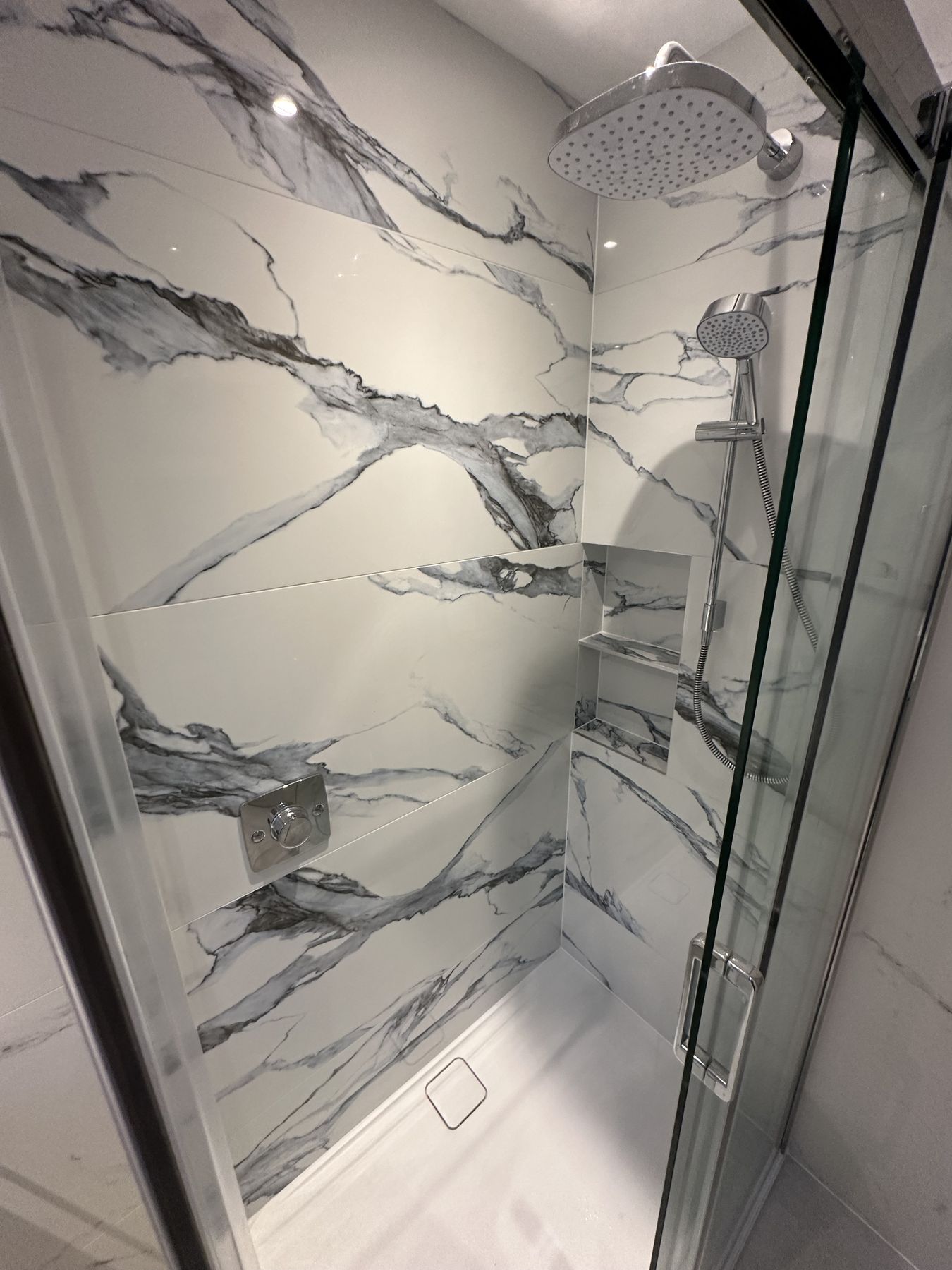
See tanking in progress on Quiet Marble, Clear Glass in Bloomsbury.
Coverage
How much of the bathroom to tank
| Room type | Recommended coverage |
|---|---|
| Bath with shower over | Walls around the bath to full shower height |
| Shower enclosure or walk-in | All shower walls to ceiling plus the floor in front |
| Wet room | Entire floor plus walls in the wet zone, usually to full height |
| Flats above other dwellings | Consider tanking the whole floor |
Planning a wet room? Read wet room costs in London.
FAQ
Frequently asked questions
There is no single law, but BS 5385 expects wet areas to be waterproofed and many warranties depend on it.
Standard plasterboard is not suitable in wet areas; use a tanking system or waterproof boards.
Liquid systems usually need several hours between coats and up to 24 hours before tiling, depending on the product.
Signs include loose tiles, cracked grout, damp patches below or nearby, and musty smells.
Sources
Sources and further reading
Related services: wet rooms, full bathroom renovation. Related projects: Quiet Marble, Clear Glass, A Wet Room in Stone, Concrete Calm.