How long does a bathroom renovation take?
A standard London bathroom usually needs three to six weeks on site, but design, ordering and lead times come first.
Most people ask how long the builders will be in the house. The better question is how long the whole project takes — because the on-site part is only the middle of it.
Key takeaways
Small shower rooms often take two to three weeks on site; standard bathrooms four to six; large or reconfigured rooms seven to ten.
Design, specification and product lead times usually add several weeks before work begins.
Curing times for screeds, tanking and adhesives cannot be rushed without risking the finish.
Missing materials are the most common reason a three-week job becomes six.
Ordering everything before the strip-out is the single best way to protect the schedule.
The big picture
The whole timeline, start to finish
| Stage | What happens | Typical duration |
|---|---|---|
| Consultation and survey | Understanding the room, measuring and checking services | 1–2 weeks |
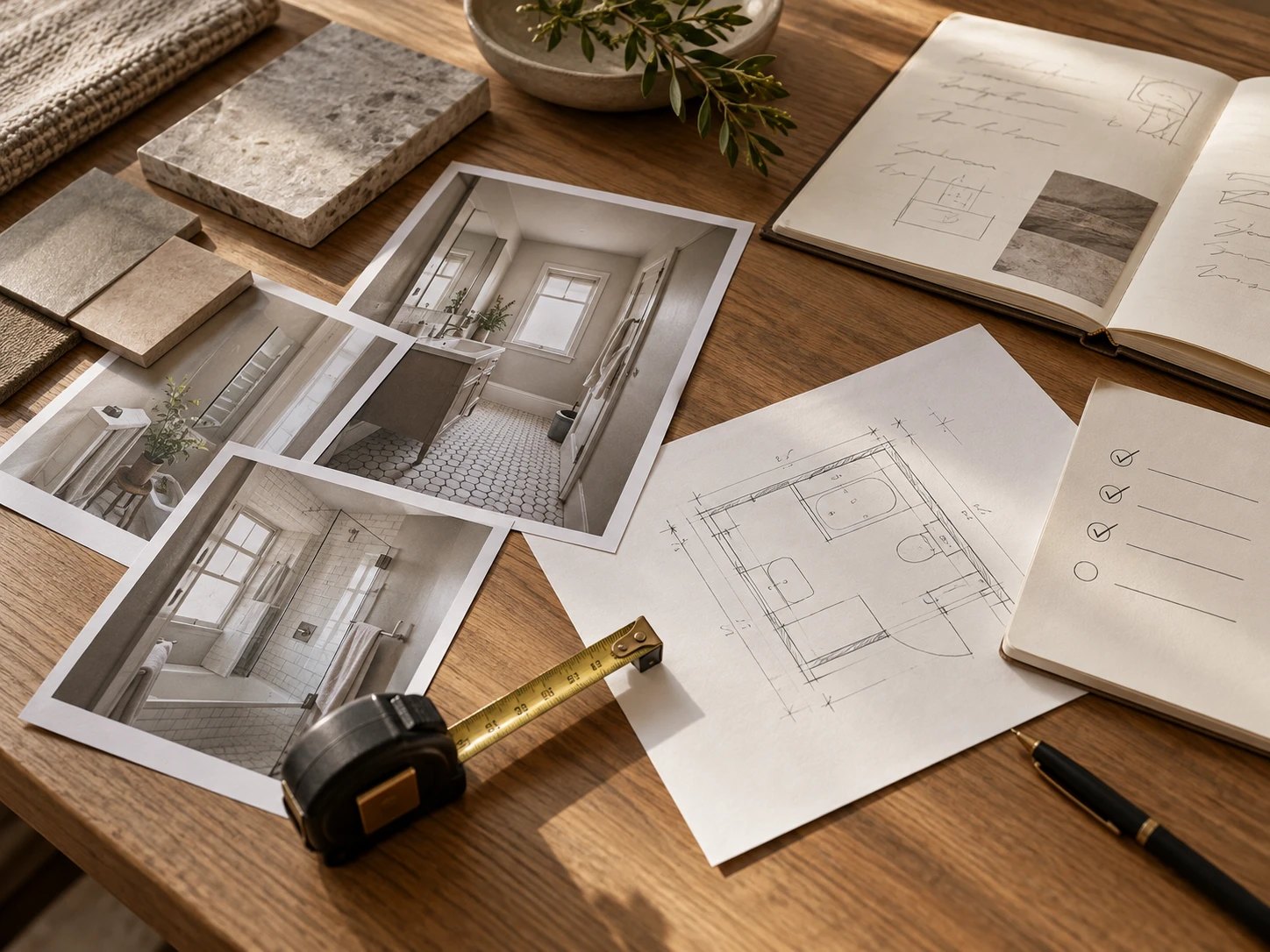
| Design and specification | Layout, materials, fittings, drawings and a written scope | 2–4 weeks |
| Ordering and lead times | Tiles, sanitaryware, glass, joinery and stone | 2–8 weeks |
| Build on site | Strip-out to handover | 2–10 weeks |
| Snagging and handover | Final checks, sealant, cleaning, walk-through | A few days |
Lead times for bespoke items such as stone vanity tops, made-to-measure glass and joinery are often the longest part of the programme. Placing those orders early usually shortens the time the house is disrupted.
On site
What happens each week on site
Strip-out
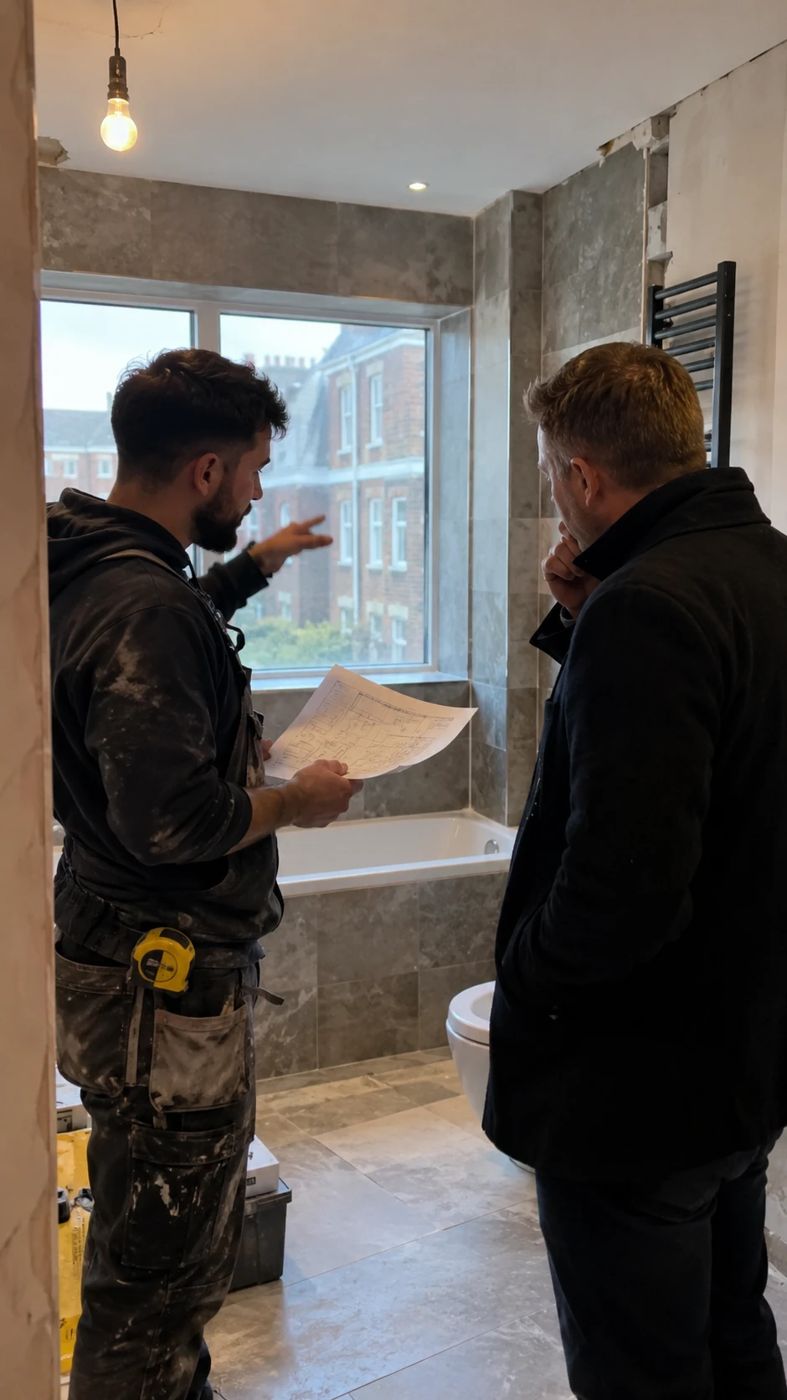
Old fittings, tiles and boards come out; the floor and walls are checked. In older homes this is when hidden issues appear.
First fix
Plumbing and electrical routes are installed or moved, extraction is ducted and any structural work is done.
Preparation and waterproofing
Walls are boarded, floors levelled or laid to falls and wet areas tanked. Some products need 24 hours or more to cure.
Tiling
Usually the longest single stage. Large formats, patterns and natural stone take longer.
Second fix
Sanitaryware, brassware, furniture, glass, lighting and accessories are fitted.
Finishing
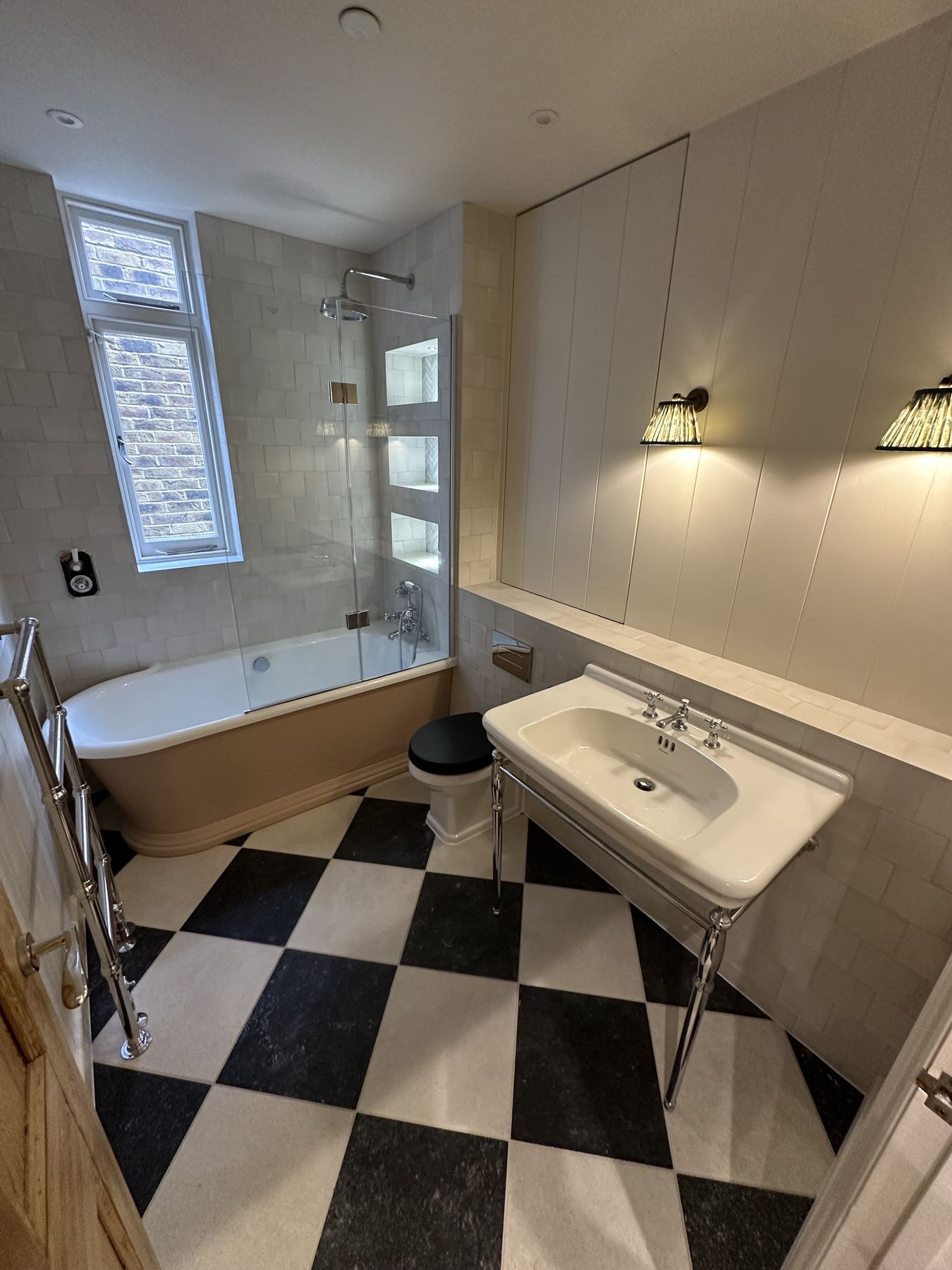
Grout, silicone, decoration, testing and a final clean.
What slows things down
The most common causes of delay
- Late or damaged deliveries. Everything should be on site, checked, before strip-out.
- Hidden problems. Rotten joists, leaks or old lead pipework found behind the walls.
- Changes during the build. Moving a fitting after first fix means redoing work.
- Curing times. Screeds, tanking and adhesives need time — rushing them risks failures later.
- Access in flats. Lift bookings, working hours and building rules.
For period houses specifically, see renovating a bathroom in a Victorian or Edwardian home.
Saving time
How to keep the project on schedule
Finish the design first
Agree the layout, tiles and fittings in writing before work starts.
Order early
Confirm lead times and have everything delivered before strip-out.
Keep one point of contact
One team coordinating the trades avoids gaps between plumber, electrician and tiler.
Plan for the unknown
Allow a little time and budget contingency, especially in older buildings.
Our full bathroom renovation service is planned this way, with design and ordering completed before the room is touched.
FAQ
Frequently asked questions
Not usually. Most families use a second bathroom or make other arrangements for the weeks on site; we plan the sequence to keep that period as short as possible.
A compact en-suite with no layout changes can often be finished in two to three weeks on site.
Walls and floors must be flat, waterproofed and set out carefully, and adhesives and grout need time to cure between stages.
As soon as the design is agreed — ideally several weeks before the planned start date.
Sources
Sources and further reading
Related services: full bathroom renovation, bathroom design. Related projects: Light Under the Eaves, Framed in Black, Pattern and Precision.